
"coffee growing map"
700 article(s) found
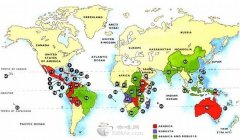
Basic knowledge of Coffee training Global Coffee producing area Map
Coffee trees grow in tropical or subtropical agricultural gardens centered around the equator and called coffee belts. Most of the coffee production is between the Tropic of Cancer, 25 degrees north of the tropical or subtropical equator and 30 degrees south of the equator. An area with an annual average temperature of 16-25 degrees Celsius, no Frosts Descent and rainfall of 1600-2000 mm.

Coffee World Map-Guatemala Flavor Characteristics, Growing Environment and Awards
Professional barista exchanges, please pay attention to coffee workshop (Weixin Official Accounts cafe_style ) Guadi is the nickname of coffee friends for Guatemala (also translated Guatemala). This Mayan city sits atop 37 volcanoes, two of which erupted in 2010. With frequent tornadoes and natural disasters everywhere, it is a veritable dangerous place. But fertile volcanoes

Coffee World Map--Panamanian coffee's rise, growing environment and flavor varieties
Coffee basics a quick and easy guide (Kevin Knox, John Wiley Sons Publications), published in 1997, describes Panamanian coffee this way: it is very similar to the coffee produced in Costa Rica's Tres Rios: balanced

Coffee belt (COFFEE WORLD MAP)
Coffee trees grow in tropical or subtropical agricultural gardens centered around the equator and called coffee belts.

Coffee World Map: Grafting History of Coffee Beans in Guatemala
Guatemala "Danger Land" is a nickname for Guatemala (also translated as Guatemala) by coffee friends. This Mayan city sits atop 37 volcanoes, two of which erupted in 2010. With frequent tornadoes and natural disasters everywhere, it is a veritable "dangerous place." But fertile volcanic soil, rolling hills

Introduction to the taste of Costa Rican coffee beans with the best baking degree, time trend map and flavor description.
The best roasting degree of Costa Rican coffee beans, time trend map flavor description taste introduction Costa Rican coffee full particles, ideal acidity, unique strong flavor Costa Rican coffee industry was originally controlled by the Costa Rican Coffee Industry Company (InstitutodelCafdeCostaRica ICAFE) and now by the official Coffee Committee (OficinadelCaf)

Coffee Fruit structure Map Variety-which parts of Coffee Fruit
Coffee fruit structure map variety-which part of the coffee fruit the coffee fruit is very small, like a cherry. Ripe coffee fruit is red (special varieties are not discussed), also known as coffee cherries. There are three primary species of coffee: Arabica coffee (low yield, delicate, but high quality), Robusta (most productive, easy to raise, but not good quality), and Liberia (slowly

Coffee Fruit decomposition Map growth and harvest of coffee
Coffee Fruit decomposition Diagram Coffee growth and harvesting are coffee beans fruits? When many people hear the word coffee beans, it is easy to mistakenly think that coffee beans are fruits like soybeans, but they are not. Coffee beans are obtained through some procedures from the seeds of fruits grown on coffee trees, so coffee beans are not fruits. Coffee knowledge popularization course Ⅰ: coffee beans are fruits
Coffee common sense what is a coffee belt (COFFEE WORLD MAP)
Coffee trees grow in tropical or subtropical agricultural gardens centered around the equator and called coffee belts. Most of the coffee production is between the Tropic of Cancer, 25 degrees north of the tropical or subtropical equator and 30 degrees south of the equator. An area with an annual average temperature of 16-25 degrees Celsius, no Frosts Descent and rainfall of 1600-2000 mm. At present, coffee is mainly produced by seven countries.

World Coffee Map-- A Collection of Information on Coffee producing areas in Central America and Panama
Exchange of professional baristas Please pay attention to the coffee workshop (Wechat official account cafe_style) Panama coffee flavor and texture is medium and uniform, quite similar to the Blue Mountain temperament. Panamanian coffee is very smooth, full grains, light weight, and perfect acidity balance, its high-quality coffee beans flavor is pure, very characteristic, it is recommended to adopt moderate roasting. Most of the Panamanian coffee belongs to medium and low prices.
Boutique Coffee Science detailed explanation of Coffee Belt (COFFEE WORLD MAP)
Coffee trees grow in tropical or subtropical agricultural gardens centered around the equator and called coffee belts. Most of the coffee production is between the Tropic of Cancer, 25 degrees north of the tropical or subtropical equator and 30 degrees south of the equator. An area with an annual average temperature of 16-25 degrees Celsius, no Frosts Descent and rainfall of 1600-2000 mm. At present, coffee is mainly produced by seven countries.

Quality specification of Brazilian Santos coffee beans planting base map characteristic brand
The quality specification of Brazilian Santos coffee beans planting base map features the rich taste of the brand extends slowly on the tongue, completely sweeping the entire taste, and lasted for dozens of minutes. 1. Palate: slightly sweet with soft acidity, sweetness has its unique round ripe taste, its unique sweet, sour, bitter taste is extremely elegant. two。 Bouquet: intense aromas of fruit and grass. 3. Vision
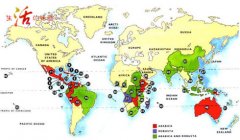
General knowledge of boutique coffee beans map of global coffee producing areas
Coffee trees grow in tropical or subtropical agricultural gardens centered around the equator and called coffee belts. Most of the coffee production is between the Tropic of Cancer, 25 degrees north of the tropical or subtropical equator and 30 degrees south of the equator. An area with an annual average temperature of 16-25 degrees Celsius, no Frosts Descent and rainfall of 1600-2000 mm.
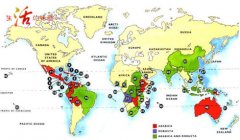
Coffee training knowledge: global Coffee producing area Map
Coffee trees grow in tropical or subtropical agricultural gardens centered around the equator and called coffee belts. Most of the coffee production is between the Tropic of Cancer, 25 degrees north of the tropical or subtropical equator and 30 degrees south of the equator. An area with an annual average temperature of 16-25 degrees Celsius, no Frosts Descent and rainfall of 1600-2000 mm.

Myanmar, a coffee producer that almost disappeared from the world coffee map.
For information, please follow the Coffee Workshop (Wechat official account cafe_style). On July 13, 1813, Protestant missionaries known as the Apostles of Burma, Adoniram Judson and Ann Judson of the American Baptist Church came to Myanmar with Catholicism and coffee as indispensable drinks in daily life. In 1885, Burma became a British colony.
The famous high "mountain" coffee on the coffee map introduces the effect of coffee planting altitude on the flavor.
Professional baristas please follow the coffee workshop (Wechat official account cafe_style) there are some mountain-named coffee beans, such as Blue Mountain and Kilimanjaro Mountain. The flavor and taste of coffee beans growing up at high altitude will become very good, won't they? Today I will introduce the high differences that affect the quality of coffee. Conditions for planting coffee trees in rainy and dry seasons, the annual rainfall is 1800 millimeters.

Yemeni Coffee Map the connection between Yemeni Coffee and Mocha Coffee which is the most expensive in Yemen
Professional coffee knowledge exchange more coffee bean information please follow the coffee workshop (Wechat official account cafe_style) for lovers who dabble in coffee slightly, when it comes to Yemeni coffee, it is easy to associate it with Mocha. Yemen has a long history of growing coffee. By the early 17th century, Yemeni coffee beans began to be exported to Europe from the southwestern port of Mocha, and Europeans used the mocha.

Recommended baking degree of Colombian Coffee Flavor Map of Colombian Coffee beans
Professional baristas Please follow the Coffee Workshop (official Wechat account cafe_style) over the past decade, the province of Hulia has been regarded as the best and most indicative coffee producing area in Colombia, where many small farmers specialize in micro-batches of boutique coffee in southern Colombia, each farmer has an average of 3 hectares of land to grow coffee.
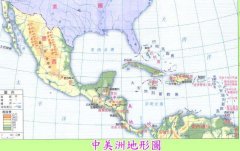
Learn more about the description of Central American boutique coffee on the coffee map.
Central America is a land bridge connecting North and South America. There are seven countries, namely, Belize, Costa Rica, El Salvador, Guatemala, Honduras, Nicaragua and Panama. Seven Central American countries all produce coffee, with Guatemala, Costa Rica and Honduras among the top 10 coffee exporters in the world. Coffee started in Central America in the 18th century, an important economy.

Brazil mojiana coffee beans planting base map characteristics grinding scale processing method variety introduction
Coffee was first introduced to Brazil in the early 18th century. In 1727, the Brazilian government sent a handsome army officer to secretly bring coffee seeds back to Brazil from French Guiana on the grounds of mediating border disputes. It is said that the wife of the governor of French Guiana was deeply fascinated by this officer. Therefore, in 1727, the Brazilian government sent a handsome army officer to secretly bring coffee seeds back to Brazil.